Elevate Your Business: Expert IT Consulting Services

IT Consulting Services: How Precise Business Solutions Boosts Growth and Operational Efficiency
IT consulting turns technology spending into measurable business outcomes by reviewing existing systems, recommending practical improvements, and guiding implementation. This article outlines what IT consulting covers, why small and mid-sized businesses benefit from outside expertise, and how focused services — from managed IT and cybersecurity to strategic planning — lower costs, improve uptime, and enable sustainable growth. You’ll get clear explanations of core service categories, hands-on features of managed IT, the role of cybersecurity consulting, and how an IT strategy roadmap aligns technology with your business goals. Along the way we offer actionable steps owners and IT leaders can take now to stabilize environments, prioritize investments, and protect data while scaling operations.
Sections include concise checklists, comparison tables that map services to business outcomes, and practical examples SMBs can use to evaluate providers. Relevant keywords like it consulting, managed it services, cybersecurity consulting, cloud consulting, and it strategy consulting are integrated into straightforward guidance so you can choose the right mix of support, outsourcing, and planning for your organization.
What Are IT Consulting Services and Why Do Businesses Need Them?
IT consulting combines technical review, project planning, and vendor-neutral guidance to diagnose technology gaps, design targeted improvements, and deliver solutions that increase efficiency and reduce risk. Consultants perform system assessments, produce prioritized roadmaps, and help implement changes so technology supports business goals and compliance needs. For SMBs, hiring external consultants provides specialist skills on demand—without the long-term cost of full-time hires—giving access to managed IT services, cloud expertise, virtualization, and cybersecurity when you need them.
Business Consulting Services for SME Growth and Efficiency
Small and medium-sized enterprises drive much of Europe’s economy, yet many face obstacles that limit growth. Engaging professional business consultants is one proven way to overcome these barriers. This study examines how different consulting services affect SME growth in revenue and staffing, with a focus on identifying which consulting approaches deliver the biggest impact.
Specifics of business consulting services used by small and medium enterprises in a transition economy, 2005
| Service Type | Characteristic | Primary Business Benefit |
|---|---|---|
| Managed IT Services | Ongoing operations & support | Predictable costs, reliable uptime |
| Cybersecurity Consulting | Risk assessment & response | Smaller breach impact, faster recovery |
| Cloud Consulting | Migration & optimization | Greater agility, cost efficiency |
This comparison helps you match common SMB goals to the right consulting approach and sets up practical examples of what consulting engagements typically include.
What Does IT Consulting Include for Small and Medium-Sized Businesses?
For SMBs, IT consulting usually starts with an infrastructure assessment and then covers help desk support, managed infrastructure, cloud migration planning, virtualization, communications (VOIP) advice, and cybersecurity audits. The initial assessment documents network health, backup posture, and security gaps, then produces a prioritized improvement roadmap. For example, an e-commerce firm might move to a hybrid cloud, add automated backups, and deploy endpoint protection to reduce downtime and payment fraud risk while improving site reliability.
- Assessment and a prioritized roadmap
- Managed support and ongoing monitoring
- Targeted security hardening and controls
These services let small teams focus on core operations while IT stays aligned with business needs.
How IT Consulting Enhances Operational Efficiency and Digital Transformation
IT consulting improves efficiency by removing redundant processes, consolidating platforms, and introducing automation and cloud-native patterns that reduce manual work and latency. Consultants translate business priorities into technical projects — for example, automating patch management to cut help-desk tickets and increase uptime. Common KPIs influenced include system availability, mean time to repair, and operational cost per user, all of which accelerate digital transformation without disrupting day-to-day work.
Practical tactics include process mapping, platform consolidation, and staged migrations that preserve continuity while delivering measurable efficiency gains and clearer ROI for future investments.
How Do Managed IT Services Support Small Business Success?

Managed IT services bundle continuous monitoring, help desk support, backups, patching, and endpoint protection into subscription plans that turn unpredictable IT costs into predictable operating expenses. Outsourcing routine operations gives SMBs 24/7 oversight, faster incident response, and proactive problem-solving so small issues don’t become costly outages. By centralizing activities like network monitoring and data backup, managed services focus on keeping your business running smoothly.
Managed IT Services: The Role of Standards in Consulting
This paper examines practical considerations around standards and the delivery of IT services by managed service providers (MSPs). It reviews academic and professional literature to identify how standards influence service quality and consistency in outsourced IT management.
Managed IT services: the role of IT standards, 2008
- 24/7 Network Monitoring: Spots anomalies before users are affected and shortens downtime.
- Help Desk Support: Resolves user issues quickly to keep teams productive.
- Automated Backups & Recovery: Preserves data and speeds restoration after incidents.
Together these features lower total cost of ownership and make budgeting more predictable.
| Feature | Frequency / Method | Business Impact |
|---|---|---|
| Network Monitoring | Continuous, agent-based | Shorter outage windows |
| Patch Management | Weekly / automated | Fewer security incidents |
| Backup & Recovery | Nightly / tested | Faster recovery, less data loss |
The table connects managed features to concrete operational outcomes — why SMBs prioritize them when continuity matters.
When well executed, managed IT reduces downtime and controls costs by catching issues early and shifting from break/fix to proactive maintenance. For SMBs that value uptime and predictable spending, Precise Business Solutions provides responsive, friendly 24/7 support, proactive problem-solving, and cost-effective packages tailored to small business needs. Their integrated approach combines IT support, outsourcing, virtualization, and cybersecurity to reduce vendor fragmentation and accelerate onboarding.
What Are the Key Features of Managed IT Services for SMBs?
Core managed service components include continuous monitoring, a staffed help desk, endpoint protection, automated backups, and patch management. Each reduces a specific risk: monitoring shortens detection time, help desk minimizes user downtime, and backups limit data-loss impact. Typical SLAs link response and resolution targets to business-critical systems so priorities align with revenue-generating functions.
- Guaranteed response times for critical incidents
- Backup verification and recovery testing
- Defined coverage hours and escalation paths
Comparing these elements helps you choose a managed partner that matches your risk tolerance and budget.
How Do Managed IT Services Prevent Downtime and Reduce Costs?
Managed providers use proactive patching, automated health checks, capacity planning, and regular recovery drills to lower mean time to detect and mean time to repair. Cost savings come from fewer emergency fixes, smaller in-house staffing needs, and predictable subscription pricing that simplifies cash flow. For example, proactive patching and monitoring often cut unscheduled downtime by measurable amounts, translating to fewer lost sales hours and higher employee productivity.
Moving to a managed model shifts capital expenditure to operational spending and stabilizes IT budgets while keeping access to specialist skills that would be expensive to hire full time.
What Is Cybersecurity Consulting for Businesses and Why Is It Critical?

Cybersecurity consulting assesses an organization’s threat exposure and implements practical controls — including risk assessments, incident response planning, and compliance mapping — to reduce breach likelihood and impact. The work combines technical testing, policy creation, and staff training so firms both prevent attacks and respond effectively when incidents occur. For SMBs, security consulting is essential because a single breach can disrupt operations and damage customer trust far beyond the company’s size.
IT Consulting: A Cybersecurity Risk Assessment Framework for Business Growth
This paper proposes a framework for risk analysis and impact assessment within information security management systems, illustrated by a case study in the IT consulting sector. It formalizes risk calculation and shows how organizations can apply the framework to improve security decision-making. As IT infrastructures grow more complex, effective cybersecurity management—often led by a CISO—becomes central to balancing risk reduction and cost.
Developing a risk analysis strategy framework for impact assessment in information security management systems: A case study in it consulting industry, F Kitsios, 2022
| Security Service | Outcome | Relevant Framework |
|---|---|---|
| Risk Assessment | Prioritized risks to address | NIST / basic controls |
| Incident Response | Faster containment and recovery | Playbook-driven steps |
| Compliance Mapping | Audit readiness | Industry or regional regs |
How Does Cybersecurity Consulting Mitigate Risks and Ensure Compliance?
Consulting starts with an asset inventory and vulnerability scan to rank risks by business impact. From there consultants draft policies, implement technical controls (firewalls, endpoint protection), and create incident response plans with clear roles and playbooks. Compliance mapping aligns controls to applicable standards and helps SMBs prepare for audits or client security requirements.
A simple SMB security checklist includes asset inventory, backup verification, privileged account controls, and phishing tests to establish a baseline and prioritize improvements.
What Are the Benefits of Proactive Cybersecurity Solutions for SMBs?
Proactive cybersecurity lowers breach probability, can reduce insurance premiums in some cases, and protects customer trust by showing responsible data stewardship. Early detection limits business interruption and financial fallout, while staff training reduces human-factor risk. Measurable benefits include fewer security-related help-desk tickets, shorter containment windows, and lower recovery costs after incidents.
If you’re ready to act, Precise Business Solutions offers services like risk assessment, incident response planning, and compliance support to help SMBs find and fix vulnerabilities; scheduling a security assessment is a practical next step to quantify exposure and set priorities.
How Can IT Strategy Consulting Help Align Technology with Business Goals?
IT strategy consulting builds a technology roadmap that connects current-state assessments to prioritized initiatives, timelines, budgets, and KPIs so investments deliver measurable business value. Strategy work includes gap analysis, prioritizing modernization (cloud migration, automation, analytics), and an implementation plan with milestones to support growth and innovation. The outcome is a sequenced set of projects that reduces technical debt, improves efficiency, and creates new opportunities.
- Current-state assessment and gap analysis.
- Prioritized initiatives with timelines and budgets.
- KPIs and governance to measure value realization.
This approach ensures every technology decision ties back to business outcomes and lets you stage change without overwhelming operations.
What Is Included in an Effective IT Strategy and Technology Roadmap?
An effective roadmap documents the current-state inventory, gap analysis, prioritized initiatives, estimated costs, timelines, risk mitigation, and target KPIs for success. It balances quick wins that boost resilience with strategic projects that enable capabilities like cloud-native services or analytics. Clear ownership, checkpoints, and governance keep projects aligned with business objectives and allow course corrections as needs evolve.
Executives should expect deliverables that translate technical work into business terms: projected revenue or cost impact, resource needs, and a phased timeline that minimizes disruption.
How Does IT Strategy Consulting Support Business Growth and Innovation?
Strategy consulting ties technology investments — such as automation, cloud moves, or data analytics — to outcomes like faster time-to-market, lower operating costs, and new revenue streams. By prioritizing projects with the best ROI and lowest implementation risk, consultants help businesses innovate without overcommitting resources. Measurement frameworks then track adoption and performance so leadership can see clear returns.
For SMBs ready to align planning and execution, Precise Business Solutions develops IT roadmaps that combine technology and digital needs into one actionable plan and offers a straightforward next step to request a strategic planning consultation.
Frequently Asked Questions
What should small businesses consider when choosing an IT consulting provider?
Look for a provider with proven experience in the technologies you use, relevant industry experience, and positive client references. Confirm they offer the services you need—managed IT, cybersecurity, cloud—and that their support model, response times, and escalation paths match your expectations. Check that their pricing and contract terms are transparent and that their offerings can scale as your business grows.
How can IT consulting help with compliance and regulatory requirements?
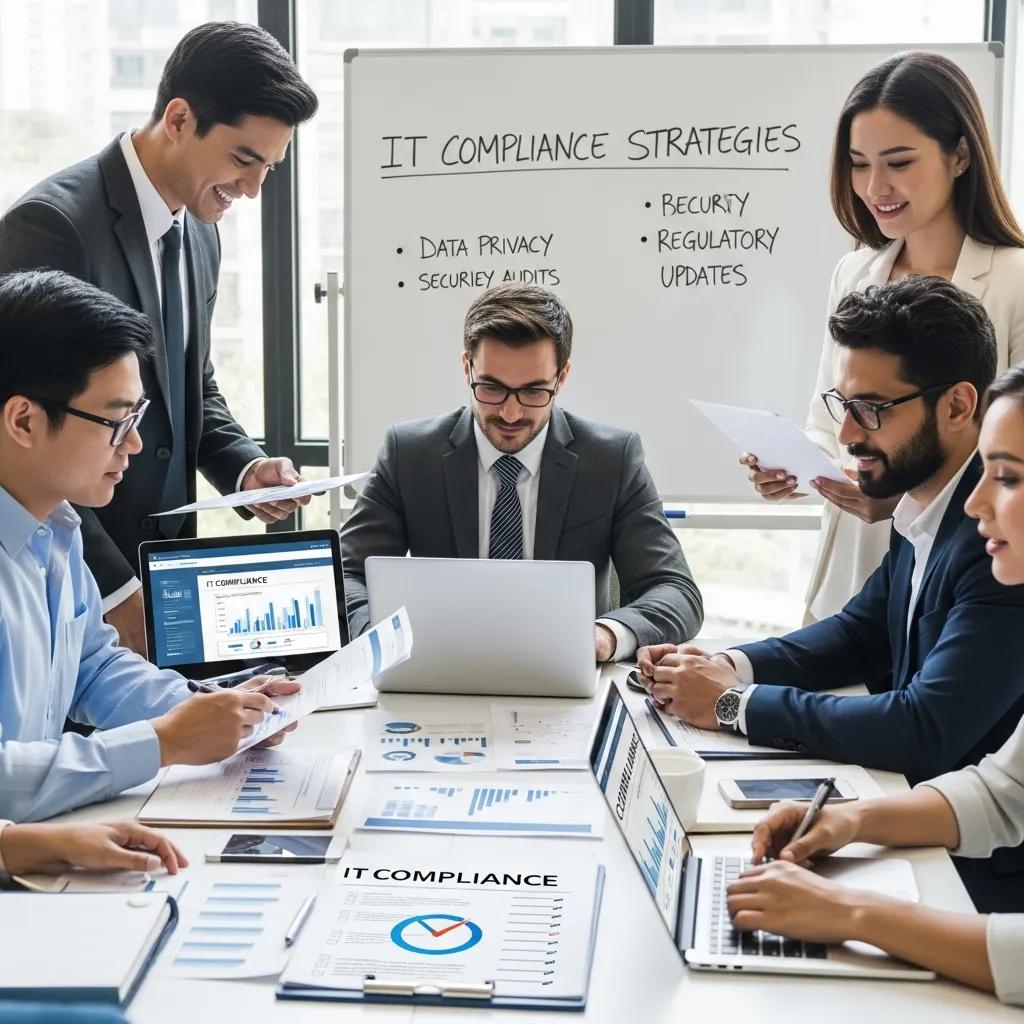
IT consultants help you map regulatory requirements to technical controls and processes. They perform gap assessments, create policies, implement controls like encryption and access management, and provide training so staff understand compliance responsibilities. This preparation reduces audit risk and the chance of costly non‑compliance penalties. IT consultation
What role does employee training play in IT consulting services?
Employee training is essential. It ensures staff can use new tools correctly and follow security best practices. Training topics range from cybersecurity awareness to software workflows and data handling. A well-trained team reduces human error, lowers security risk, and helps you realize the full value of IT investments.
How can businesses measure the success of IT consulting engagements?
Define KPIs and benchmarks before work begins. Typical metrics include system uptime, incident volume, mean time to repair, cost per user, and user satisfaction. Regular reviews with your consultant track progress against these targets, and a post-engagement assessment shows long-term impact on operations and growth.
What are the potential risks of not utilizing IT consulting services?
Without outside guidance, businesses risk inefficiencies, more downtime, and greater exposure to cyber threats. Keeping up with fast-changing technology and compliance can be expensive and error-prone in-house. Lacking a strategic IT roadmap can slow growth and mean missed opportunities to use technology for competitive advantage.
How often should businesses reassess their IT strategy?
Reassess your IT strategy at least once a year or whenever major changes occur—new technology, shifts in business goals, or regulatory updates. Regular reviews keep strategy aligned with business needs and spot opportunities to optimize technology investments.
Conclusion
Working with experienced IT consultants helps small and mid-sized businesses get more value from technology: lower costs, higher uptime, and better security. By combining managed IT, cybersecurity, and strategic planning, organizations can build a more resilient foundation for growth. Take the next step toward a stronger IT framework—Precise Business Solutions can tailor a consulting strategy to your needs and help you move from planning to results.