

What Is SEM & Does SEM Include SEO?
Search engine marketing is one of the most misunderstood concepts in digital marketing. Business owners, marketers, and even agencies often use SEM and SEO interchangeably, while others treat them as completely separate disciplines. This confusion leads to poor strategy, wasted ad spend, and missed growth opportunities.
So let’s clear it up once and for all:
What is SEM?
Does SEM include SEO?
And how should businesses actually use SEM and SEO together?
This guide breaks everything down clearly—without jargon—so you understand how search engine marketing really works in today’s digital landscape.
What Is SEM (Search Engine Marketing)?
SEM stands for Search Engine Marketing, a digital marketing strategy used to increase a website’s visibility in search engine results pages (SERPs).
At its core, SEM is about getting traffic from search engines—specifically when users are actively searching for products, services, or information.
Historically, SEM referred to all marketing efforts within search engines, both paid and organic. Over time, however, the industry has evolved, and the meaning of SEM has shifted.
The Modern Definition of SEM
Today, SEM is most commonly used to describe paid search advertising, particularly:
-
Google Ads
-
Microsoft (Bing) Ads
-
Paid search campaigns
-
PPC (pay-per-click) advertising
In modern usage:
-
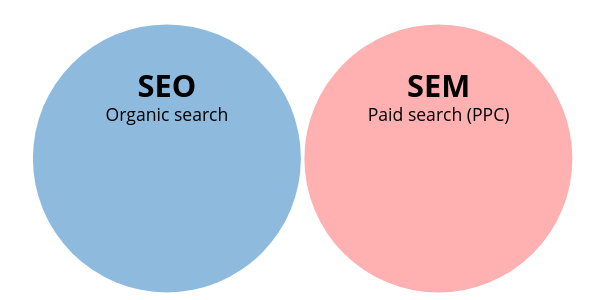
SEM = Paid search
-
SEO = Organic search
However, this is where confusion begins—because technically and historically, SEO is part of SEM.
Does SEM Include SEO? (Short Answer)
✅ Yes — technically and historically, SEM includes SEO.
❌ No — in modern marketing language, SEM usually refers only to paid search.
Both answers are correct depending on context.
Let’s break this down clearly.
The Original Meaning: SEM Included SEO
When search engines first became marketing platforms, SEM was the umbrella term that included:
-
Search Engine Optimization (SEO)
-
Paid search advertising (PPC)
-
Keyword research
-
Search analytics
-
Conversion tracking
Under this definition:
SEM = SEO + Paid Search
This definition is still technically correct and used in academic and legacy marketing contexts.
The Modern Industry Usage: SEM ≠ SEO
In today’s marketing world, most professionals use the terms like this:
-
SEO → Organic search optimization
-
SEM → Paid search advertising
This distinction became common because:
-
Paid search platforms (like Google Ads) grew more complex
-
SEO became a specialized discipline of its own
-
Businesses needed clearer budget separation
As a result, SEM has become shorthand for PPC advertising, even though SEO still falls under the broader concept of search marketing.
Why This Confusion Matters
Misunderstanding SEM vs SEO leads to real problems, such as:
-
Businesses thinking SEO is “free SEM”
-
Marketers ignoring organic search in their strategy
-
Overspending on ads while neglecting long-term growth
-
Poor reporting and unclear ROI
To build an effective search strategy, you must understand how SEO and SEM work independently—and together.
What Is SEO (Search Engine Optimization)?
SEO is the process of optimizing a website to rank organically in search engine results.
SEO focuses on earning traffic naturally by improving relevance, authority, and user experience.
Core SEO Components:
-
Keyword research
-
On-page optimization
-
Technical SEO
-
Content creation
-
Link building
-
Local SEO
-
User experience (UX)
SEO does not involve paying for clicks. Instead, it requires time, consistency, and strategy.
What Is Paid SEM (PPC Advertising)?
Paid SEM refers to advertising in search engines where you pay for each click or impression.
Common Paid SEM Platforms:
-
Google Ads
-
Microsoft Ads (Bing)
-
YouTube Ads (search-driven intent)
Paid SEM Includes:
-
Keyword bidding
-
Ad copy creation
-
Landing page optimization
-
Conversion tracking
-
Quality Score optimization
-
Budget management
Paid SEM delivers immediate visibility, but traffic stops when you stop paying.
SEO vs SEM: Key Differences
| Feature | SEO | SEM (Paid Search) |
|---|---|---|
| Cost | No cost per click | Pay per click |
| Speed | Slow to build | Immediate |
| Longevity | Long-term | Short-term |
| Trust | Higher user trust | Lower trust |
| Control | Less control | Full control |
| Scalability | Compounds over time | Limited by budget |
Both are powerful—but serve different roles.
How SEO and SEM Work Together
The best digital strategies do not choose SEO or SEM.
They use SEO and SEM together.
Why Combining SEO and SEM Works:
-
Covers all stages of buyer intent
-
Maximizes SERP real estate
-
Improves data sharing
-
Reduces overall cost per acquisition
-
Strengthens brand authority
When SEO and SEM work in isolation, performance suffers.
Example: SEO + SEM in Action
Imagine a business offering managed IT services.
SEO Strategy:
-
Rank for informational searches:
-
“What is managed IT services”
-
“Benefits of outsourced IT”
-
-
Rank for local searches:
-
“Managed IT services Spring TX”
-
-
Publish blog content and service pages
SEM Strategy:
-
Bid on high-intent keywords:
-
“IT support company near me”
-
“Managed IT services pricing”
-
-
Run ads to conversion-optimized landing pages
Result:
-
SEO builds long-term authority
-
SEM captures ready-to-buy users
-
Combined strategy dominates search results
When Should You Use SEO?
SEO is ideal when you want:
-
Long-term growth
-
Sustainable traffic
-
Brand authority
-
Lower long-term costs
-
Consistent inbound leads
SEO is especially powerful for:
-
Service businesses
-
B2B companies
-
Local businesses
-
Content-driven brands
When Should You Use SEM?
Paid SEM is ideal when you need:
-
Immediate results
-
Predictable traffic
-
New product launches
-
Competitive keyword coverage
-
Lead generation at scale
SEM is especially effective for:
-
High-margin services
-
Time-sensitive offers
-
Competitive markets
-
Retargeting campaigns
Is SEM Better Than SEO?
This is the wrong question.
The right question is:
How should SEO and SEM support each other?
SEM Without SEO:
-
Expensive
-
Short-term
-
No compounding growth
SEO Without SEM:
-
Slow
-
Misses high-intent traffic
-
Vulnerable to algorithm changes
The strongest strategy uses both.
How Google Actually Views SEO and SEM
Google does not rank SEO higher because you run ads.
Google does not penalize sites for advertising.
But Google does reward strong user experience, relevance, and authority—which both SEO and SEM can improve when aligned.
Shared Factors:
-
Landing page quality
-
Page speed
-
Mobile usability
-
Content relevance
-
Conversion experience
This is why SEO improvements often lower paid ad costs.
SEM Myths That Hurt Businesses
❌ “SEO is free”
SEO costs time, expertise, content, and resources.
❌ “Paid ads replace SEO”
The moment ads stop, traffic disappears.
❌ “SEM is just Google Ads”
SEM is broader—it’s about search intent marketing.
❌ “You must choose one”
Choosing only one limits growth.
SEM, SEO, and Buyer Intent
Search intent is the foundation of both SEO and SEM.
Types of Search Intent:
-
Informational
-
Navigational
-
Commercial
-
Transactional
How SEO & SEM Map to Intent:
-
SEO dominates informational and commercial intent
-
SEM dominates transactional and urgent intent
Using both ensures full-funnel coverage.
Does SEM Include Local SEO?
Local SEO is part of organic search, which historically falls under SEM.
Local SEO includes:
-
Google Business Profile optimization
-
Local citations
-
Reviews
-
Local landing pages
Paid local ads (like Local Services Ads) fall under paid SEM.
Again—SEM is the umbrella, but modern usage separates paid and organic.
Reporting SEO vs SEM Correctly
Many businesses misreport performance by lumping SEO and SEM together incorrectly.
Best Practice:
-
Report SEO separately (organic traffic, rankings, conversions)
-
Report SEM separately (ad spend, CPC, CPA, ROAS)
-
Analyze combined search performance
This gives clarity and smarter budget decisions.
The Future of SEM and SEO
In 2025 and beyond:
-
AI-driven search is increasing
-
Zero-click searches are growing
-
Paid competition is rising
-
Organic trust still dominates decisions
SEO is becoming more strategic.
SEM is becoming more expensive.
The businesses that win will integrate both intelligently.
So, Does SEM Include SEO? (Final Answer)
Technically: Yes
Historically: Yes
Practically (today): Usually no
SEM is the strategy of marketing through search engines.
SEO and paid search are the two execution channels.
Understanding this distinction allows you to:
-
Build smarter campaigns
-
Allocate budgets properly
-
Generate higher-quality leads
-
Scale sustainably
Final Thoughts
If you remember only one thing, remember this:
SEO builds authority. SEM buys attention. Together, they dominate search.
Businesses that treat SEO and SEM as separate silos leave money on the table. Those that align them create predictable, scalable growth.
