


Managed IT for law firms means outsourcing day-to-day technology operations to specialists who deliver proactive security, reliable continuity, and practice-aware IT governance. This guide outlines what a tailored managed IT program looks like for legal teams, why law firms need industry-specific controls, and how a strategic IT approach lowers risk while enabling secure remote work, smooth integrations with case-management and document systems, and predictable operating costs. You’ll find clear explanations of core cybersecurity controls (MFA, encryption, EDR), cloud deployment options that suit legal workflows, and support and disaster-recovery practices designed to limit lost billable hours. We map technical measures to compliance drivers like ABA confidentiality duties and common privacy frameworks, show practical integration patterns, and give concise comparison tables and summaries to help managing partners and CIO-level readers prioritize investments in law office security and managed IT.
Managed IT services matter for law firms because they combine continuous monitoring, compliance-focused controls, and operational reliability to protect privileged information and keep billable work moving. Outsourcing to specialists ensures consistent patching, backups, and threat detection—reducing breach risk and expensive downtime that threaten client confidentiality and revenue. A tailored managed IT program also simplifies vendor coordination and tightens integration between case management and document systems, cutting duplicated work and smoothing collaboration. Together, these capabilities deliver defensive value (fewer incidents) and operational value (faster recovery and better workflow), supporting firm growth while meeting ethical obligations.
At Precise Business Solutions, we design managed IT specifically for legal practices. Our services emphasize proactive monitoring, predictive maintenance, and scalable support. We pair dedicated response models with certified technicians who align technical controls to regulatory priorities, consolidate services for cost efficiency, and build long-term, client-focused partnerships.
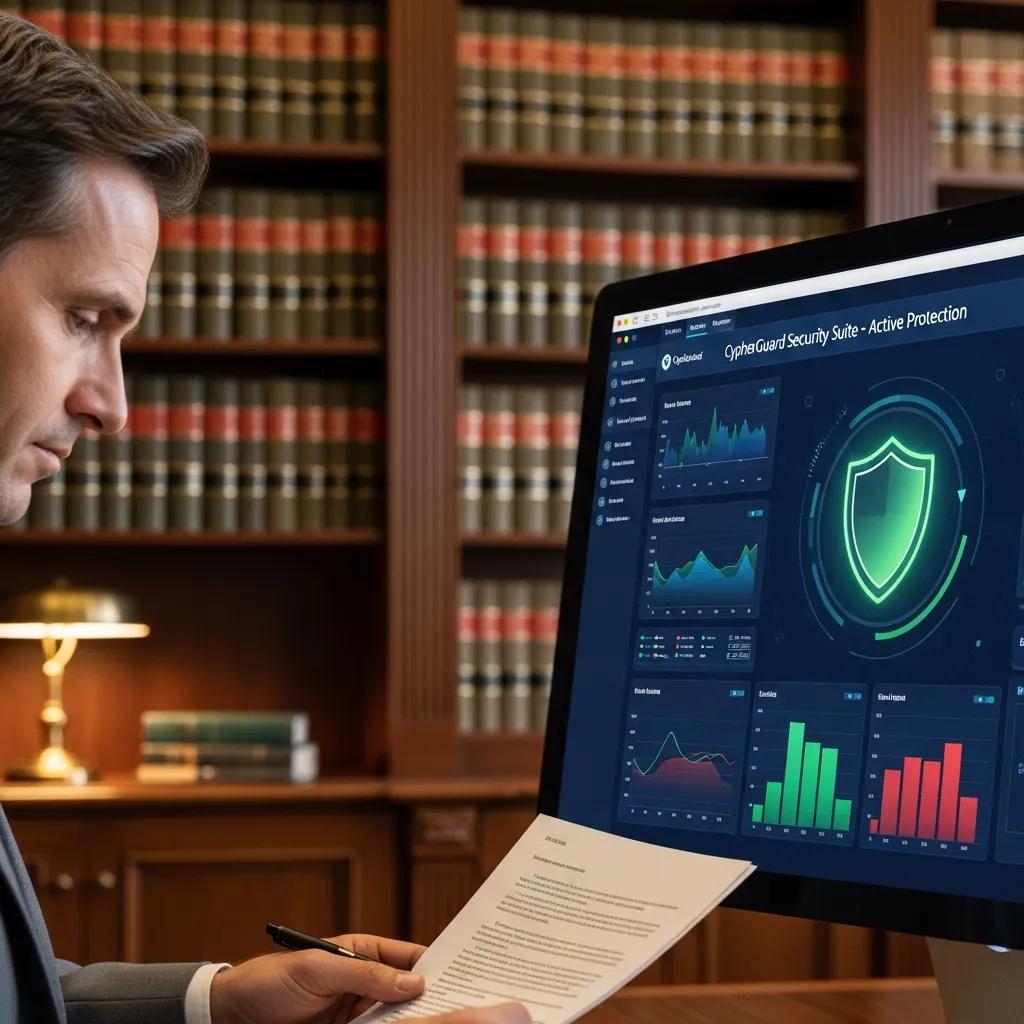
Managed IT raises security and compliance through layered technical controls, continuous monitoring, and governance that directly support professional duties and regulatory requirements. Core practices include enforced multi-factor authentication, disk and transport encryption, endpoint detection and response (EDR), and centralized logging to preserve auditable trails for incident investigations.
Those controls reduce credential theft, keep sensitive documents protected in transit and at rest, and provide documented evidence of reasonable safeguards during audits or disciplinary inquiries. Regular patch management and vulnerability scanning close common attack paths, and clear policies plus staff training mitigate human risk—supporting privacy frameworks and ABA technology guidance.
This layered approach naturally prompts questions about how specific controls affect compliance. The next section offers a concise comparison of common cybersecurity controls and the protections they provide.
Beyond compliance, the controls above reduce recurring interruptions to client service, and they feed directly into incident response and disaster-recovery planning.
Without IT tuned for legal work, firms frequently suffer downtime, fragmented software stacks, insecure remote access, and uneven data protection that all harm client service and professional obligations. Preventable outages cost billable hours, delay filings, and erode trust. Disconnected tools create duplicate entry and version-control headaches that slow staff productivity. Weak remote access or poor access controls increase the risk of credential theft and accidental disclosure of privileged material. Lacking formal backup and recovery plans, firms can face prolonged outages with unclear recovery targets, creating compliance and malpractice exposure.
Resolving these challenges requires a coordinated mix of technical controls, integration planning, and support SLAs that prioritize legal workflows and measurable recovery objectives—topics we cover in the cloud and support sections that follow.
Cybersecurity reduces a firm’s attack surface, detects anomalies quickly, and documents response actions that satisfy notification and audit requirements. Identity controls, encryption, endpoint protections, and centralized logging create multiple barriers to data exfiltration and generate the forensic records regulators expect. Regular incident-response planning and tabletop exercises help contain events fast and preserve client confidentiality while limiting regulatory and reputational harm. Below are the primary defensive measures firms should prioritize.
These controls form the core defensive posture; mapping them to compliance requirements and exercising response plans completes an effective program.
Intro to EAV table: The table below compares common cybersecurity controls, what they protect, and their primary compliance impact for law firms.
| Control | Protects | Compliance Impact |
|---|---|---|
| Multi-Factor Authentication (MFA) | User accounts and credential-based takeover | Shows strong access control and reasonable safeguards |
| Encryption (at rest & in transit) | Confidential documents and communications | Supports data-protection obligations and breach mitigation |
| Endpoint Detection & Response (EDR) | Malware, ransomware, and lateral movement | Enables timely detection and documented containment |
| Centralized Logging / SIEM | Event correlation and an auditable trail | Provides evidence for incident response and regulatory reporting |
Using these controls together yields stronger protection than relying on any single measure—each fills gaps the others leave open.
Precise Business Solutions implements MFA, encrypted backups, EDR, and compliance-focused controls mapped to common privacy frameworks and ethical guidance. Our delivery emphasizes measurable controls and audit-ready documentation so firms can demonstrate due care.
Law Firm Cybersecurity Risks: Staying Compliant and Protected
Law firms are increasingly targeted by cyberattacks, making proactive security and compliance essential. As the cybersecurity market grows, firms must stay current with threats and regulations to protect sensitive client data and maintain operational integrity. Understanding evolving risks and matching them with practical safeguards reduces exposure and supports professional responsibilities. Law firms must manage cybersecurity risks, 2017
Protecting legal data depends on practical controls that cover authentication, confidentiality, endpoint resilience, and human factors. Enforcing MFA on externally accessible systems prevents most account-takeover attempts. End-to-end encryption keeps privileged documents confidential during sharing and storage. EDR identifies suspicious workstation and server behavior so teams can isolate compromised devices before attackers move laterally. Complementary practices—timely patching, least-privilege access, and role-based controls—further shrink exposure and produce auditable policies that support compliance.
Together, these technical and procedural measures create an incident-ready practice, provided they’re paired with regularly tested response and recovery plans to preserve continuity when incidents occur.
Law Firm Cybersecurity: Protecting High-Value Client Data
A firm’s security is only as strong as its weakest link. Law firms hold high-value digital communications and client files that attract a range of adversaries using both advanced and low-tech methods. As electronic records and mobile devices proliferate, the threat landscape grows—making robust controls and continuous vigilance critical to protecting intellectual property, sensitive corporate records, and litigation materials.
Law Firm Cybersecurity, DB Garrie, 2024
Legal IT solutions turn regulatory and ethical requirements into actionable technical controls, policies, and documented procedures. For HIPAA/GDPR-style obligations that means controls like access management, encryption, breach notification workflows, and data-subject procedures where applicable. For ABA guidance it means safeguarding client confidentiality through secure communication, proper file handling, and evidence of technology competence. Detailed logs, change records, and incident timelines create the audit trail regulators expect. Regular audits, employee training, and policy reviews keep technical controls aligned with evolving obligations and make compliance defensible.
Mapping controls to specific duties and preserving proof of implementation reduces compliance risk and supports ethical practice.
Intro to cloud comparisons: Choosing the right cloud solutions deployment affects security, accessibility, and cost; the table below summarizes common options for legal workloads.
| Deployment Model | Security Characteristic | Operational Trade-off |
|---|---|---|
| Private cloud / dedicated hosting | Strong tenant isolation and customizable controls | Higher cost and greater configuration effort |
| Hybrid cloud | Flexible placement of sensitive workloads | Requires careful integration and governance |
| Hosted desktops / VDI | Centralized desktop control and data containment | Resource-intensive but reduces endpoint risk |
Choose a model based on data sensitivity, integration needs with document management, and your recovery objectives.
Precise Business Solutions offers secure cloud hosting and integrations with common practice- and document-management systems so firms can scale while preserving workflow compatibility and single sign‑on patterns.
Digital Legal Documentation & Case Management: Cybersecurity Challenges
This review examines how digitization of legal documentation and case management affects workflows and security. Drawing on multidisciplinary research, it highlights the rise of electronic case management systems and the cybersecurity challenges that accompany digital transformation—emphasizing the need for secure integrations and robust controls across legal technologies. LEGAL DOCUMENTATION AND CASE MANAGEMENT: A SYSTEMATIC REVIEW OF DIGITIZATION TRENDS AND CYBERSECURITY CHALLENGES IN LEGAL …, 2023

Cloud options for law firms balance secure hosting, integration with legal software, and predictable recovery outcomes. Private or dedicated hosting gives stronger isolation for highly sensitive matters. Hybrid setups let firms keep critical data on isolated infrastructure while using public cloud for less-sensitive workloads. Hosted desktops and VDI centralize control of sessions so documents don’t land on unmanaged endpoints and policies can be enforced consistently. The right choice depends on access patterns, integration requirements with case and document systems, and budget trade-offs.
Picking the appropriate model helps firms protect confidentiality without blocking remote collaboration.
Secure cloud hosting enables remote work through centralized session environments, conditional access policies, and session logging to maintain confidentiality. VDI or hosted desktops provide controlled workspaces where files remain on managed infrastructure rather than on personal devices. Conditional access checks device posture and location, while session auditing and file-activity logs preserve traceability for matters. Applying zero-trust principles reduces implicit trust for remote connections and lets attorneys work offsite without exposing privileged data.
These controls support hybrid practice patterns while helping firms meet their ethical and regulatory duties.
Most practice and document management systems integrate with cloud platforms using APIs, single sign-on (SSO), and secure connectors that sync matters, documents, and billing data. Common patterns include SSO for centralized authentication, API-based metadata synchronization for workflow automation, and connector-driven backups to include documents in recovery plans. To ensure smooth operation, validate connector support, encryption in transit, and retention policies so case workflows remain intact during outages or migrations.
Well-designed integrations reduce manual work and support business continuity—especially when paired with reliable backups.
Legal IT support improves productivity and continuity by providing responsive helpdesk coverage, clear SLAs, and tested disaster-recovery plans that prioritize billable-hour preservation and client service. Key elements include 24/7 monitoring and escalation, rapid remote-remediation tools, defined RTO/RPO targets for critical systems, and regular DR testing. Proactive monitoring cuts incident frequency, and virtual CIO services help align technology decisions with firm strategy and regulatory needs. Together these capabilities reduce downtime, stabilize operations, and let legal teams focus on client matters.
Below is a concise comparison of support features, their attributes, and the operational benefits they deliver.
| Support Feature | Attribute | Operational Benefit |
|---|---|---|
| 24/7 Helpdesk | Continuous monitoring and response | Less downtime, preserved billable hours |
| SLA & Escalation | Defined response and resolution targets | Predictable remediation and clear accountability |
| RTO/RPO-backed Backups | Encrypted offsite replication | Measurable recovery time and reduced data loss |
| Virtual CIO | Strategic planning and vendor coordination | IT aligned to business goals and budget |
Critical 24/7 support features include a helpdesk that understands legal workflows, clear escalation paths to on-site technicians, remote remediation tools, and prioritized SLAs for urgent legal tasks. A law-aware helpdesk can triage incidents by their impact on filings and deadlines; remote remediation reduces the need for dispatch; escalation protocols ensure high-severity events get immediate attention; and scheduled maintenance windows limit surprises. Together these features protect billable time and client relationships during incidents.
Effective support models pair these capabilities with measurable KPIs and regular reviews to continually improve response and resolution.
Backups and disaster recovery translate risk into action by defining recovery objectives, keeping encrypted offsite copies, and regularly testing restore procedures. Good strategies set RTO (time to restore) and RPO (acceptable data loss), use immutable backups to resist ransomware, and run DR drills to validate procedures under pressure. Offsite replication and geographically separate restore points reduce correlated risk, and documented recovery playbooks speed restoration and client notifications. Regular testing and recordkeeping keep recovery plans realistic and aligned with professional responsibilities.
These practices make downtime manageable and support continuous client service.
When continuity is a priority, Precise Business Solutions delivers 24/7 responsive support, disaster recovery planning, and scalable managed services built around legal workflows. To align RTO/RPO targets, SLAs, and testing cadence with your firm’s needs, schedule a consultation to assess requirements and next steps.
Outsourcing IT lets firms focus on legal work while relying on experts to manage technology, security, and compliance. A managed partner brings advanced cybersecurity, streamlined workflows, and 24/7 support—reducing downtime and improving client service. Outsourcing can also lower costs by avoiding the expense of in-house IT staff and infrastructure while providing predictable budgeting and access to specialized skills.
Start with a security audit that reviews policies, controls, and technologies: access management, encryption, backups, incident-response plans, and user training. Penetration testing and vulnerability scans by independent experts reveal hidden weaknesses. Regular audits against standards like ABA guidance, GDPR, or HIPAA (where applicable) help track progress and prioritize remediation.
Training is essential. Regular, role-specific education helps staff spot phishing, handle sensitive data properly, and follow security protocols. Building a culture of security awareness reduces human error—the most common cause of incidents—and ensures everyone understands their part in protecting client information.
Evaluate security features, compliance posture, integration capabilities, and support. Confirm strong encryption, granular access controls, regular third-party audits, and a track record with legal customers. Check disaster-recovery plans, backup options, and contract flexibility so the provider supports your continuity and retention requirements.
Adopt a proactive compliance program: keep policies current, train staff, perform audits, and document controls. Monitor regulatory changes and involve legal and IT experts to map technical measures to obligations. Maintain logs and evidence of compliance activities to support defensible positions during inquiries or audits.
Warning signs include frequent outages, slow systems, rising security incidents, and difficulty integrating new tools. If staff struggle to access files or collaborate, or if the firm can’t meet regulatory or recovery targets, it’s time to evaluate upgrades. Regular performance reviews and user feedback help detect these needs early.
Managed IT services are essential for modern law firms: they deliver targeted security, practical compliance support, and predictable operations so lawyers can focus on client work. With the right partner, you gain controls that protect privileged data, integrations that streamline workflows, and support that minimizes downtime. Precise Business Solutions helps firms design and operate managed IT programs that align with legal practice needs—reach out to explore how we can secure your practice and support your growth.