


Managed IT services have become a cornerstone for businesses seeking to optimize IT operations while managing costs effectively. This comprehensive guide delves into various pricing models, average costs, and the return on investment (ROI) businesses can expect. Understanding these elements is crucial for making informed decisions that align with your organization’s budget and operational needs. Many companies struggle with unpredictable IT expenses and maintaining a robust IT infrastructure. Managed services offer a solution through predictable pricing and expert support. This article explores the definition of managed IT services, common pricing models, average costs by business size, influencing factors, hidden costs, and how to calculate ROI.
Managed IT services refer to outsourcing the management of IT systems and functions to a third-party provider. These services typically include network management, data backup, cybersecurity, and IT support. By leveraging managed services, businesses can focus on core operations while ensuring their IT infrastructure is maintained by experts. Understanding these costs is essential, as it directly impacts budgeting and financial planning.
These offerings not only improve operational efficiency but also reduce the risk of downtime and data loss, making them invaluable for businesses.
The financial implications of managed services are significant. By outsourcing IT management, businesses achieve cost savings through predictable monthly fees rather than unexpected expenses associated with in-house IT management. This allows for better budget allocation and financial forecasting. Additionally, managed services can lead to reduced labor costs, as businesses no longer need to hire and train in-house IT staff.
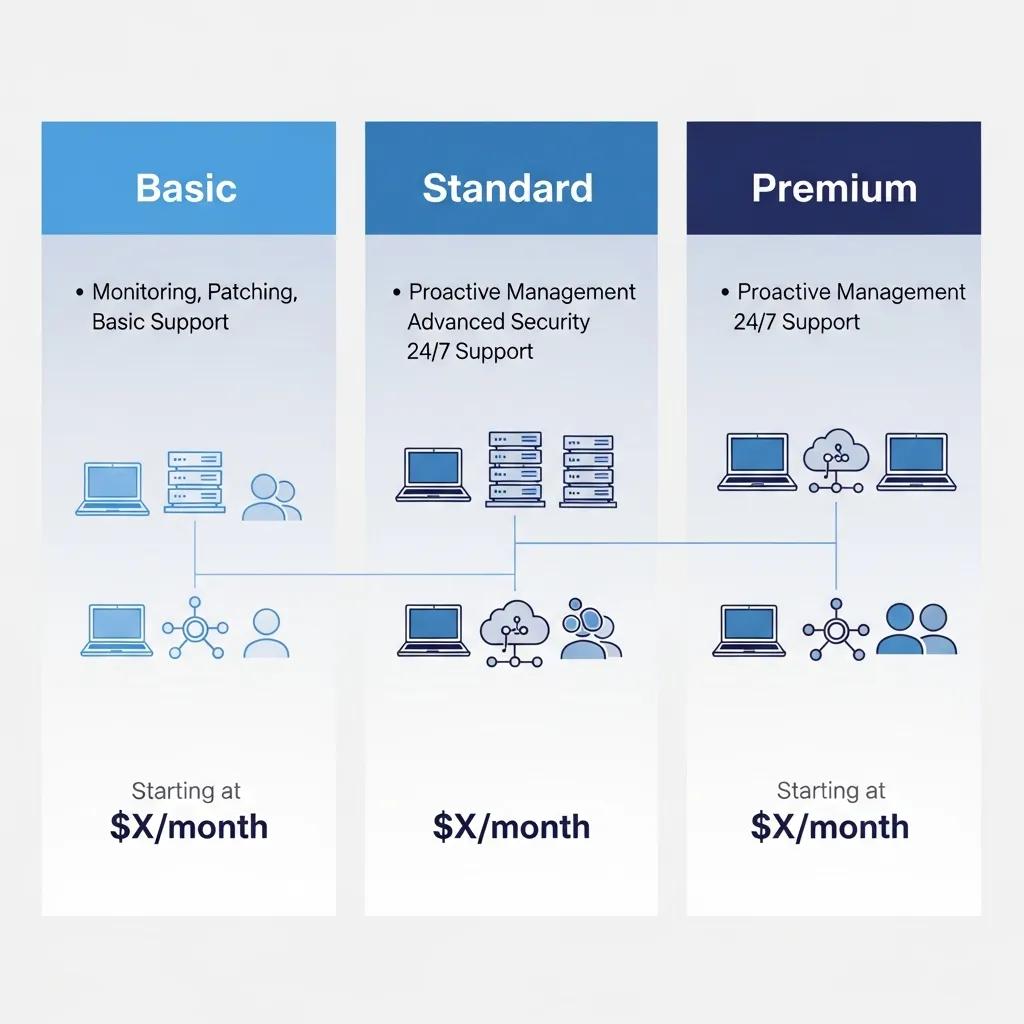
Understanding the various pricing models for managed IT services is crucial for businesses looking to make informed decisions. The most common models include per-user pricing, per-device pricing, and tiered pricing structures.
Per-user pricing is a straightforward model where businesses pay a fixed fee for each user accessing the managed services. This model is beneficial for organizations with a predictable number of users, allowing for easy budgeting and scalability. For example, if a company has 50 users, the total cost would be calculated based on the agreed-upon rate per user.
Per-device pricing charges businesses based on the number of devices managed, such as servers, workstations, and mobile devices. This model is ideal for companies with varying device counts, as it aligns costs with the actual resources used. Tiered pricing offers different service levels at varying price points, allowing businesses to choose a package that best fits their needs and budget. This flexibility can be advantageous for organizations looking to scale their services over time.
The average cost of managed IT services can vary significantly based on business size. Understanding these costs is essential for budgeting and financial planning.
For small businesses and startups, the average cost of managed IT services typically ranges from $300 to $1,500 per month. This pricing often includes essential services such as network monitoring, data backup, and basic cybersecurity measures. Small businesses benefit from these services by gaining access to expert IT support without needing a full-time in-house team.
Mid-market and enterprise companies can expect to pay between $1,500 and $7,000 per month for managed IT services. Higher costs reflect the increased complexity of their IT environments and the need for more comprehensive services, including advanced cybersecurity, compliance support, and dedicated account management. These businesses often require tailored solutions that align with their specific operational needs.
Several factors can significantly impact the pricing of managed IT services. Understanding these factors helps businesses make informed decisions when selecting a provider.
The scope of services required and the complexity of the IT environment are primary factors influencing pricing. Businesses with extensive IT infrastructure or specialized needs may incur higher costs due to the additional resources and expertise required. For instance, a company with multiple locations and diverse devices will likely face higher fees compared to a smaller organization with a simpler setup.
Cybersecurity requirements and compliance regulations can also drive up costs. Organizations in regulated industries, such as healthcare or finance, may need to invest more in managed services to ensure compliance with industry standards. Additionally, geographic location can influence pricing, as service providers may charge different rates based on regional market conditions and labor costs.
Beyond immediate cost factors, understanding broader industry trends and expert projections is crucial for long-term IT strategy. Recent market analyses consistently highlight the growing adoption of managed services. A report by *Global Tech Insights* projects the global managed services market to reach **over $400 billion by 2028**, growing at a **CAGR of 12.5%** from 2023. This growth is driven by increasing cybersecurity threats, cloud complexity, and demand for specialized IT expertise, underscoring a fundamental shift towards more resilient and expert-driven IT frameworks.
Leading industry thought leaders consistently underscore that proactive IT management through managed services is a strategic imperative for competitive advantage and operational resilience. They cite increasing cyber threats and rapid technological change as key drivers. Managed services allow organizations to mitigate risks, access cutting-edge technologies, and specialized skills that would be cost-prohibitive in-house. This strategic value extends beyond cost savings, encompassing enhanced security, innovation, and business continuity, solidifying their indispensable role in today’s digital economy.
“In today’s dynamic digital landscape, managed IT services are not just a convenience, but a fundamental pillar of business strategy and security. The ability to adapt quickly to new threats and technologies is paramount.” – *Dr. Evelyn Reed, Chief Cybersecurity Strategist at SecureNet Solutions*
InnovateTech Solutions, a rapidly growing mid-market software development firm with 75 employees, faced escalating IT challenges: frequent system downtime, increasing cybersecurity threats, and a lack of in-house IT expertise to support expansion.
InnovateTech partnered with a managed IT service provider for a comprehensive package including 24/7 network monitoring, advanced threat detection, data backup and disaster recovery, and dedicated helpdesk support.
“Partnering with managed IT services transformed our operations. We gained enterprise-level security and support, allowing our team to focus entirely on innovation. The ROI was clear and immediate.” – *Sarah Chen, CEO of InnovateTech Solutions*
When budgeting for managed IT services, it’s essential to consider potential hidden costs and onboarding fees.
Many managed service providers charge setup fees for initial configuration and onboarding, which vary widely based on service complexity. Businesses should also be aware of software licensing costs, which may not be included in the base service fee. Unexpected expenses can arise from additional support requests or hardware upgrades, so clarifying what is covered in the service agreement is crucial.
To avoid surprises, have a clear understanding of the service agreement and any potential additional costs. Businesses should ask providers for a detailed breakdown of all fees and services included in the contract. Regular communication with the service provider can also help identify any changes in service needs that may impact costs.
Calculating the ROI for managed IT services is vital for understanding the value these services bring to your organization.
To calculate ROI, businesses should consider both direct and indirect benefits. Direct benefits include cost savings from reduced downtime and improved efficiency, while indirect benefits may encompass enhanced employee productivity and customer satisfaction. The ROI can be measured by comparing the total benefits (cost savings + increased productivity + risk reduction) against the total investment in managed services. By analyzing these factors, businesses can gain a clearer picture of the financial impact of their managed IT services.
Beyond immediate cost savings, managed IT services offer long-term benefits that can significantly enhance business operations. These include improved scalability, access to the latest technology, and enhanced security measures. By investing in managed services, businesses can position themselves for future growth and adaptability in an ever-evolving technological landscape.
| Pricing Model | Description | Benefits |
|---|---|---|
| Per-User Pricing | Fixed fee per user | Predictable costs, easy scalability |
| Per-Device Pricing | Charges based on devices managed | Aligns costs with resources used |
| Tiered Pricing | Different service levels at varying prices | Flexibility to choose packages |
This table illustrates the various pricing models available for managed IT services, highlighting their unique benefits and how they cater to different business needs.
Managed IT services provide a strategic advantage for businesses looking to optimize their IT operations while managing costs effectively. By understanding the various pricing models, average costs, and factors influencing pricing, organizations can make informed decisions that align with their operational needs and budget constraints. The potential for cost savings, improved efficiency, and enhanced security makes managed services a valuable investment for businesses of all sizes.
Managed IT services primarily benefit small to mid-sized businesses lacking resources for a full in-house IT team, providing expert support and advanced technologies without overhead costs. Industries with strict compliance, like healthcare and finance, also leverage these services to meet regulatory standards while focusing on core operations.
To assess quality, businesses should consider a provider’s experience, client testimonials, and service level agreements (SLAs). Evaluate their response times, support availability, and service range. Requesting case studies or references from similar businesses can provide insights into reliability and effectiveness.
Outsourcing IT management can present risks such as data security concerns, loss of control over IT operations, and potential misalignment with business goals. It’s crucial to choose a reputable provider with strong security protocols and clear communication channels. A solid service agreement outlining expectations and responsibilities can help mitigate these risks.
Managed IT services support business scalability by providing flexible solutions that adapt to changing needs. As a business grows, its IT requirements become more complex. Managed service providers can quickly scale services up or down, offering additional resources or support as needed. This flexibility allows businesses to focus on growth without the burden of constantly adjusting their IT infrastructure.
When reviewing an SLA, businesses should look for clear definitions of service expectations, including response times, uptime guarantees, and support availability. The SLA should also outline the scope of services, any penalties for non-compliance, and procedures for addressing issues. A well-defined SLA ensures mutual understanding of service standards and accountability.
Yes, managed IT services significantly aid businesses in meeting compliance and regulatory requirements. Providers often have expertise in industry-specific regulations and can implement necessary security measures, data management practices, and reporting protocols. Outsourcing these responsibilities helps businesses remain compliant while focusing on core operations, reducing the risk of costly fines or legal issues.
Investing in managed IT services yields long-term financial benefits, including reduced operational costs, improved efficiency, and minimized downtime. By outsourcing IT management, businesses avoid the high costs associated with hiring and training in-house staff. Additionally, managed services often lead to better resource allocation and strategic IT planning, ultimately contributing to enhanced productivity and profitability over time.