

In today’s fast-paced digital landscape, tech services are an indispensable strategic imperative, ensuring businesses operate efficiently and securely. This guide delves into managed IT, cloud computing, cybersecurity, and consulting solutions. Leading industry analysts, such as Gartner and Forrester, consistently project the global tech services market to exceed $1.5 trillion by 2027, underscoring their growing importance. Readers will gain insights into how these services enhance operational efficiency, drive innovation, and protect sensitive data. Understanding these services is essential for maintaining a competitive edge. This article explores the importance of tech services, the benefits of managed IT services, the role of cloud computing, cybersecurity solutions, and how to choose the right tech service provider.
Tech services encompass a wide range of solutions designed to support and enhance business operations through technology. They provide the necessary infrastructure, security, and expertise to navigate the complexities of the digital world. A comprehensive IDC survey indicated that over 70% of small to medium-sized businesses now engage external tech service providers as strategic partners for critical IT functions. By leveraging tech services, companies can improve efficiency, reduce costs, foster innovation, enhance customer experience, and focus on core competencies while leaving technology management to experts.

Managed IT services oversee and manage a company’s IT infrastructure, ensuring systems run smoothly and efficiently through proactive measures. These services include proactive network management, secure data backup and recovery, and responsive help desk support. Independent studies show businesses utilizing managed IT services can experience up to a 25% reduction in IT operational costs and a significant decrease in system downtime, often aligning with ITIL best practices. Outsourcing IT management provides expert support, reduced downtime, and enhanced security, allowing businesses to focus on growth and innovation.
Cloud computing has revolutionized business operations by providing scalable resources, global accessibility, and innovative solutions, establishing itself as a cornerstone of digital transformation. It allows companies to access computing power, storage, and applications over the internet, enabling them to scale operations quickly. Recent market forecasts project the global public cloud market to grow by over 20% annually, reflecting its widespread adoption for agility and cost-effectiveness. This flexibility fosters innovation, as businesses can experiment with new technologies without significant upfront investments. Cloud solutions also offer built-in security features and robust disaster recovery capabilities.
Managed IT services significantly enhance business operations by providing comprehensive support and proactive management of IT systems, streamlining processes, improving productivity, and reducing operational risks.
Key components of managed IT services include:
These components form a robust framework, often adhering to IT service management (ITSM) principles, creating an IT environment that proactively supports business objectives.
Managed IT services enhance security and uptime through continuous monitoring and proactive maintenance. By implementing advanced security measures like firewalls and intrusion detection systems, businesses protect data from cyber threats. Organizations leveraging managed security services consistently report a 40% faster detection and response time to security incidents. Rigorous system updates and proactive maintenance ensure IT infrastructure remains operational, significantly reducing downtime and associated financial losses, with leading providers often guaranteeing 99.9% uptime through stringent Service Level Agreements (SLAs).
Understanding core cloud computing services is essential for businesses looking to leverage the cloud effectively. These services include Infrastructure as a Service (IaaS), Platform as a Service (PaaS), and Software as a Service (SaaS).
| Service Type | Definition | Key Features | Management Responsibility | Typical Use Cases |
|---|---|---|---|---|
| IaaS | Provides virtualized computing resources over the internet. | Scalability, flexibility, cost-effectiveness. | User manages OS, applications, data; Provider manages virtualization, servers, storage, networking. | Virtual machines, storage, networks, web hosting, data analysis. |
| PaaS | Offers a platform allowing customers to develop, run, and manage applications. | Development tools, middleware, database management; abstracts underlying infrastructure. | User manages applications, data; Provider manages OS, middleware, runtime, infrastructure. | Application development, analytics, business process management. |
| SaaS | Delivers software applications over the internet on a subscription basis. | Accessibility, automatic updates, reduced IT burden; fully managed by provider. | Provider manages all aspects (application, data, infrastructure). | CRM, ERP, email, office productivity suites. |
This table illustrates the differences between IaaS, PaaS, and SaaS, highlighting their unique features, management responsibilities, and benefits for businesses, along with common use cases.
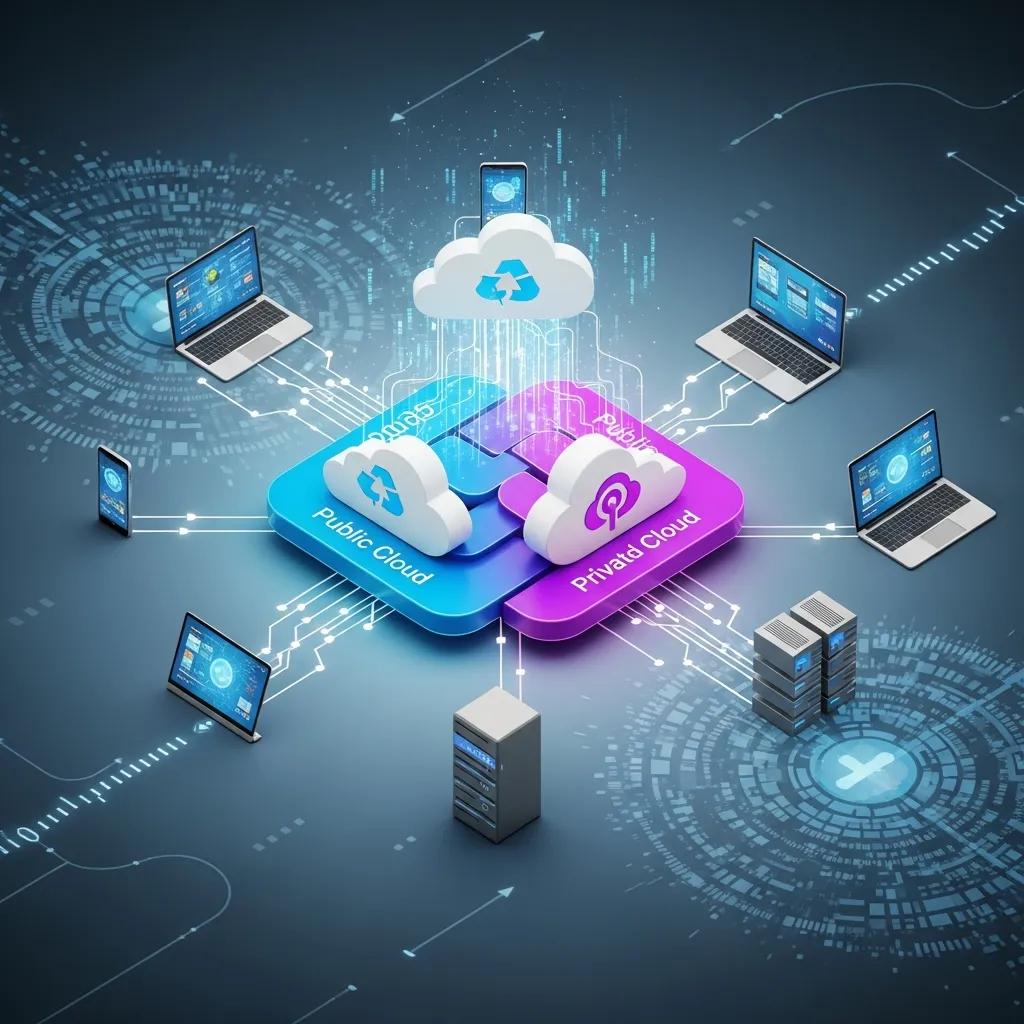
Hybrid and multi-cloud strategies allow businesses to combine public and private cloud resources, providing flexibility and optimizing costs. Hybrid cloud solutions enable organizations to keep sensitive data on private clouds while utilizing public clouds for less critical operations, often leveraging technologies like Kubernetes. Multi-cloud strategies involve using multiple cloud service providers to avoid vendor lock-in and enhance resilience, with over 80% of enterprises reportedly adopting a multi-cloud approach. These strategies balance agility with governance, though they also introduce complexities in management, requiring careful planning for efficiency and disaster recovery.
Cybersecurity solutions are vital for protecting business data and systems from a growing array of cyber threats. These solutions encompass various strategies and technologies designed to safeguard sensitive information and maintain operational integrity.
Zero Trust Architecture is a security model that assumes no user or device is trustworthy by default, regardless of their location. This approach requires continuous verification of user identities and device security before granting access to resources, often integrating multi-factor authentication (MFA) and micro-segmentation. Implementing Zero Trust is crucial in today’s evolving threat landscape, as it minimizes the risk of data breaches and unauthorized access; organizations adopting Zero Trust principles have reported a significant 50% reduction in the impact of data breaches, according to a recent IBM study, solidifying its position as a foundational paradigm in modern enterprise security.
Managed Detection and Response (MDR) services provide organizations with advanced threat detection and incident response capabilities. These services utilize advanced technology (like EDR) and human expertise for proactive threat hunting, monitoring networks, responding to incidents in real-time, and mitigating threats. Leading MDR providers consistently demonstrate threat detection times measured in minutes, a stark contrast to traditional in-house security teams. By leveraging MDR services, businesses enhance their security posture and ensure rapid response to emerging threats, even without a dedicated 24/7 security operations center, leveraging a blend of cutting-edge technology and human intelligence.
IT consulting services play a pivotal role in driving digital transformation and business growth. These services help organizations align their technology strategies with business objectives, ensuring technology investments deliver maximum value.
IT strategy consulting involves assessing an organization’s current technology landscape and developing a roadmap for modernization. This includes identifying areas for improvement, recommending new technologies (e.g., AI, IoT), and creating implementation plans. Research indicates that businesses engaging in effective IT strategy consulting are 1.5 times more likely to achieve their digital transformation goals. By engaging in IT strategy consulting, businesses enhance operational efficiency, reduce costs, achieve competitive differentiation, and stay competitive in a rapidly evolving market; this strategic foresight is critical for navigating complex technological shifts and securing long-term competitive advantage.
AI-as-a-Service (AIaaS) provides businesses with access to artificial intelligence capabilities without the need for extensive in-house expertise or infrastructure. This service allows organizations to leverage AI for various applications, such as data analytics, customer service automation (chatbots), and predictive modeling. Market intelligence reports project the AIaaS market to grow at a robust CAGR of over 30%, signaling its rapid and widespread adoption. By adopting AIaaS, businesses can accelerate their digital transformation efforts, gain valuable insights from their data, and deploy intelligent solutions more quickly and cost-effectively, effectively democratizing advanced AI capabilities for businesses of all sizes.
Selecting the right tech service provider is crucial for ensuring that your business receives the strategic support it needs to thrive. Several critical factors should be considered when making this decision.
When choosing a managed service provider, businesses should evaluate the following factors:
These considerations will help businesses find a provider that aligns with their specific requirements and strategic goals.
Industry-specific tech services are tailored to meet the unique challenges faced by different sectors. For example, healthcare organizations require specialized solutions for managing patient data securely, while financial institutions need robust compliance measures. By leveraging industry-specific services, businesses can address their unique challenges more effectively and enhance operational efficiency.
| Service Type | Industry | Unique Challenges Addressed | Specific Solution Example |
|---|---|---|---|
| Healthcare IT | Healthcare | Compliance with HIPAA, secure patient data management, EHR interoperability. | HIPAA-compliant cloud storage, telemedicine platforms. |
| FinTech Solutions | Finance | Fraud detection, regulatory compliance (e.g., PCI DSS), real-time transaction processing. | AI-driven fraud analytics, blockchain for secure transactions. |
| Retail Tech | Retail | Customer engagement, inventory management, omnichannel experience, supply chain optimization. | POS systems with integrated CRM, predictive analytics for inventory. |
| Manufacturing IT | Manufacturing | Operational Technology (OT) security, IoT integration for smart factories, supply chain visibility. | SCADA system protection, industrial IoT platforms. |
This table highlights how different tech services cater to specific industries, addressing their unique challenges and enhancing operational efficiency with concrete solution examples.
Outsourcing IT services provides small businesses access to expert knowledge and advanced technologies they might not afford in-house. This allows them to focus on core business activities while ensuring IT infrastructure is professionally managed. It also leads to cost savings by avoiding expenses associated with hiring full-time IT staff and investing in expensive technology. Furthermore, outsourcing significantly enhances security and compliance, as reputable providers adhere to stringent security frameworks and offer 24/7 monitoring and rapid incident response.
To ensure data compliance, businesses should choose tech service providers that adhere to relevant regulations (e.g., GDPR, HIPAA) and industry standards (e.g., PCI DSS). Conduct thorough due diligence on the provider’s compliance history, security practices, and certifications (e.g., ISO 27001, SOC 2 Type II). Regular internal and external audits help identify gaps. Implement internal policies and training for employees on data protection. Collaborating with legal and compliance experts can further strengthen efforts.
Emerging trends in tech services for 2024 include increased adoption of AI and machine learning for automation and decision-making, particularly in hyperautomation. Businesses are also integrating cybersecurity into all operations, emphasizing AI-driven threat intelligence and XDR. The rise of remote work drives demand for cloud-based solutions, secure collaboration tools, and Desktop-as-a-Service (DaaS). Sustainability in tech services is also gaining traction, with companies seeking eco-friendly solutions and practices.
Measuring the ROI of tech services involves evaluating both quantitative and qualitative benefits. Businesses can track cost savings from reduced downtime, increased productivity (e.g., through automation), and improved operational efficiency. For example, calculating the cost of downtime saved versus service cost provides direct ROI. Assessing customer satisfaction and retention rates also provides insights. Implementing KPIs related to service delivery, such as response times and security incident reduction, helps quantify value. A comprehensive ROI analysis should also consider intangible benefits like enhanced brand reputation and competitive positioning.
When selecting a cybersecurity solution, businesses should prioritize comprehensive protection including threat detection, prevention, and response across endpoints, networks, and cloud environments. Look for real-time monitoring, automated threat intelligence, regular updates, and robust incident response support, ideally backed by a dedicated SOC or MDR service. Consider scalability, integration with existing infrastructure, and compliance with industry standards. User-friendliness, training resources, and a strong vendor reputation for innovation and customer support are also important.
Tech services play a crucial role in supporting remote work by providing necessary tools and infrastructure. Cloud computing solutions enable access to files and applications from anywhere, while VPNs or Zero Trust Network Access (ZTNA) ensure secure connections. Managed IT services offer ongoing support and troubleshooting for remote workers, minimizing downtime. Robust cybersecurity measures, including endpoint protection and data encryption, are essential to protect sensitive data accessed remotely. Integrated collaboration platforms (e.g., Microsoft 365) and unified communications solutions are indispensable for effective remote teamwork.